
Sahar Ali Afifi Ali

Mr. Sahar Ali Afifi Ali

أ. سحر علي عفيفي علي

Lecturer

Islamic Studies - Islamic Studies in English

TEFL Master's degree Islamic Studies in English
1 Research
1 Courses

Biography

Sahar Ali Afifi Ali (PhD Candidate) Sahar Ali Afifi Ali is a senior English language educator, researcher, and professional translator with more than three decades of academic experience in higher education across Egypt and Saudi Arabia. Throughout her career, she has taught a wide range of undergraduate and preparatory-year English courses while holding several academic leadership positions, including Head of English Department, English Coordinator, Preparatory Year Coordinator, and Acting Vice Dean. Her work reflects a strong commitment to innovative language education, curriculum development, quality assurance, and technology-enhanced learning. Education Sahar earned a Master of Arts in Teaching English as a Foreign Language (TEFL) from the Arab Open University (2025). She also holds a Professional Diploma in Legal and United Nations Translation from the American University in Cairo (2017), a Diploma in Methods of Teaching English from the Ministry of Defense Language Institute (2017), another Diploma in Methods of Teaching English from Menoufia University (1988), and a Bachelor of Arts in English Language and Education from Menoufia University (1986). She is currently pursuing her PhD, focusing on contemporary approaches to English language education and translation studies. Academic Focus Dr. Sahar's academic work centers on English Language Teaching (ELT), Applied Linguistics, Translation Studies, Corpus Linguistics, and Artificial Intelligence in Language Education. Her research particularly explores corpus-based language learning, AI-assisted language teaching, translation pedagogy, educational technology, English for Academic Purposes (EAP), English for Specific Purposes (ESP), and academic writing. She is especially interested in integrating AI tools and corpus resources into language instruction to enhance learner engagement, translation competence, and academic writing skills. As both a researcher and educator, she combines theoretical insights with practical applications to support innovation in language teaching and translator training. Conferences and Professional Development Dr. Sahar actively participates in international conferences and professional development events that focus on emerging trends in English language teaching and educational technology. Her recent conference presentations include: NILE TESOL Egypt Conference (2026) – Building Grammatical Resilience Through Corpus-Based Translation Instruction ANELTA Women SIG Conference (2025) – The Evolving ELT Classroom: Empowering Women, Transforming Education TESOL Dubai Conference (2025) – AI-Powered Corpus Companions for Language Learning She has also participated in specialized workshops, including Crafting AI + Sketch Engine for Language Learning (2025), reflecting her ongoing engagement with corpus linguistics, artificial intelligence, and innovative pedagogical practices. Through her teaching, research, conference presentations, and professional translation work, Dr. Sahar continues to contribute to the advancement of English language education by promoting evidence-based teaching practices, technology integration, and innovative approaches to language learning and translation.

Academic Career Progression

  • Current Current academic position Faculty member Lecturer · Islamic Studies - Islamic Studies in English
  • - Current English Lecturer King Khaled University

Academic Qualifications

  • 2025 TEFL Master's degree Arab Open University - Cairo -Egypt

Scientific Research

Corpus-Based Instruction for Developing Colligational Competence in Arab EFL Translation Students

Publication date: 2026-07-08

The present research was conducted to examine the efficiency of corpus-based teaching in influencing the capacity of Arab English as a Foreign Language (EFL) university learners to recognize and use English colligational grammatical patterns in translation. A convergent mixed-methods design combined with a quasiexperimental one-group pre-test–post-test approach was used. Twenty-one first-year undergraduate translation students at the Arab Open University, Egypt, were involved in a 12-week Data-Driven Learning (DDL) intervention utilizing the British National Corpus (BNC), Sketch Engine, and BootCaT. Both quantitative and qualitative data were collected, the former through a translation achievement test administered before and after the intervention, and the latter through a post-intervention questionnaire and reflective audio recordings. Quantitative analyses involved descriptive statistics, the Kolmogorov–Smirnov test, paired-samples t-tests, and Cohen's d, while the qualitative data underwent thematic analysis. The results showed statistically significant changes in students' recognition and use of English colligational grammatical patterns, with both skills demonstrating large effect sizes. However, no major difference emerged in the case of longer translation activities, which implies that discourse-level translation competence needs a more sustained period of instructional support. Participants also reported improved grammatical awareness, increased confidence in making translation decisions, and greater reliance on authentic corpus evidence. These results affirm the need to incorporate corpus-based teaching into higher-education translation courses to strengthen grammatical knowledge and evidence-based translation practices among Arab EFL students.

Teaching

Currently teaching

  • Translation from and into English 1 (B106-16) 2026-2027 · First semester
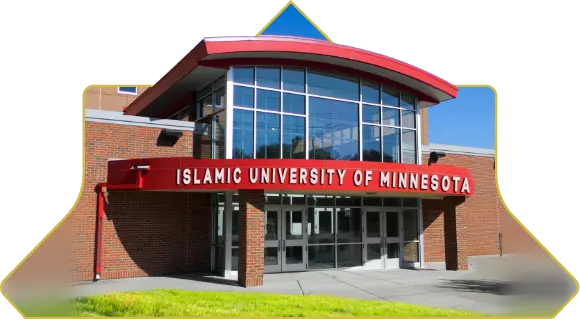
The Islamic University of Minnesota main campus
An invitation to knowledge

An Islamic university with a global mission

Islamic University of Minnesota

Register with us