
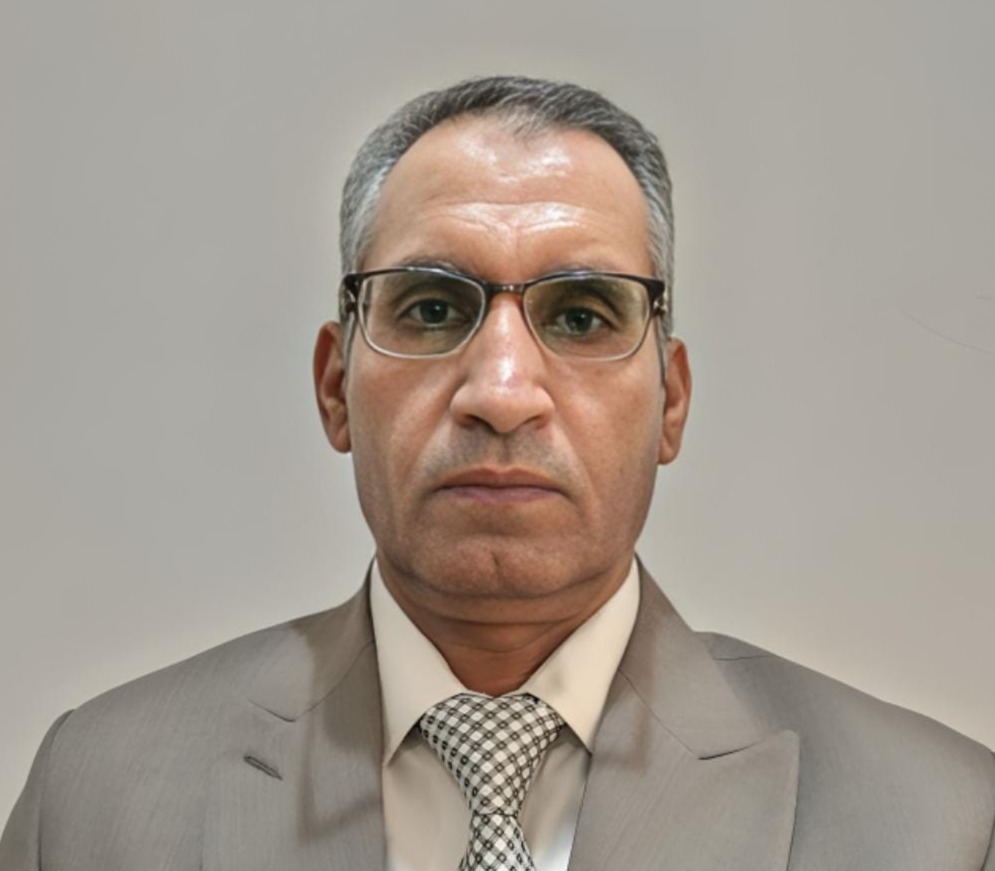
khalil Salman Aiad Hassan

Dr. khalil Salman Aiad Hassan

د. خليل سلمان عياد حسن

Assistant Professor

Educational Sciences - Educational Psychology

Educational Psychology
4 Research
1 Courses

Biography

No biography is available yet.

Academic Career Progression

  • Current Current academic position Faculty member Assistant Professor · Educational Sciences - Educational Psychology

Academic Qualifications

No academic qualifications are available yet.

Scientific Research

“Social competence of Twelfth Grade Students in Public Schools and Private Schools in the Jordanian Madaba Governorate: A Comparative Study”. International Journal of Multidisciplinary Sciences and Advanced Technology Vol 1 No 10 (2020) 72–82 2020

Publication date: 2020-09-17

After the researcher noticed the growing and varied manifestations of university violence through the various statistics and media, and on the basis that the most important objectives of science are interpretation of phenomena, prediction and control it, the researcher saw that he may contribute to identify some of the causes and factors for this phenomenon, and provide the decision maker and the school curriculum designer some necessary data, which led to the study of the social efficiency of students in the pre-university stage, the secondary school, in a comparative study between students of public schools versus private schools in Madaba, Jordan, because of importance of the social efficiency of students and their skills and social preparations in the Psychological and social adjustment with the subsequent stage, which is university life. Using a measure of social competence, the researcher built it in four main dimensions and presented it to the specialists for judging it, after applying it to a sample of 400 students, 200 of them were from private schools and 200 from public schools, there were statistically significant differences in the average scores of students in secondary schools between public and private schools on the social efficiency scale in all its dimensions, and from the arithmetic averages, it was found that these differences were in favor of public school students. As well as the existence of statistically significant differences in the average scores of students between males and females on the scale of social efficiency in all dimensions, and from the arithmetic averages show that these differences were in favor of females. Key words: Social competence, grade 12, public and private schools


Dialogue skills among twelfth grade students in public schools versus private schools in the Jordanian governorate of Madaba

Publication date: 2021-09-01

Through the researcher's observation of the increase and diversity of the manifestations of university violence through statistics and various s media, and on the basis that the most important goals of science are to explain, predict and control phenomena, the researcher felt that he should contribute to identifying some of their causes and factors, and providing the educational decision maker and school curriculum designer with some necessary data, This prompted him to study the effective dialogue skills of students in pre-university, which is the secondary school stage, in a comparative study between public school students versus private schools in the Jordanian Madaba Governorate, because of the great importance of students ’skills and their ability to fruitfully interact with others in psychological adjustment. And social with the subsequent stage, which is university life. Where the study was conducted on a community of the twelfth-grade students in the schools of the Jordanian governorate of Madaba, who numbered 2,162 students in public and private schools in the governorate 2018-2019, through a measure of effective dialogue skills that was applied to an intended sample of 400 students from this school stage. However, the level of effective dialogue skills among secondary school students in public schools was higher than that of private school students, and the level of effective dialogue skills among male students at the secondary level was higher than that of female students. Key Words: Dialogue Skills, Twelfth Grade, Madaba Governorate.

A practical program in light theory: What is required to develop social knowledge among members of the educational staff in Jordan?

Publication date: 2023-05-11

The effectiveness of a proposed program in the light of metacognitive theory in developing social competence among student members of the school student parliament in Jordan Introduction: The study of individuals’ skills and their various social and conversational competencies at early ages, enables us to predict collective and psychological performance and social, behavioral and emotional compatibility in advanced stages, with the increase in violence phenomena in its various forms in Jordanian universities, and in light of the recommendations of previous studies on the need to intensify research on student parliaments school and its role in enhancing and developing students’ competence and social skills in the pre-university stage, as well as in light of the recommendations of the political leadership on the need to strengthen and support the youth category and enable them to participate in decision-making and build the future of the state and prepare them for that through school student parliaments, so the researcher began to seek to identify and define Philosophy and foundations of a proposed program that can be an entry point for the development of social competence among high school students, based on the philosophical foundations of each of the school student parliament, social competence, social skills and metacognitive strategies, as well as the social, mental, behavioral and cultural characteristics of high school students. Methodology: It follows the quasi-experimental curriculum and design for its relevance to the intentional samples, and a measure of social efficiency that he built and presented to a group of specialized arbitrators, to suit the intended age stage, and a proposed program that he built and implemented during the academic year 2018-2019, and it consists of 10 training sessions with two training sessions per week. The duration of one session is one hour, and two quasi-experimental and one control groups, with 24 individuals in each group, 12 males and 12 females, with two measurements before and after the other. The results showed that there were statistically significant differences in the mean scores of students in the post-measurement on the social efficiency scale in all its dimensions between the quasi-experimental and control groups, in favor of the quasi-experimental group, as well as the presence of statistically significant differences in the mean scores of the quasi-experimental group students on the scale of social competence in all Its dimensions between the tribal and remote measurements, in favor of the post-measurement, and the presence of statistically significant differences in the average scores of the members of the quasi-experimental group on the social competence scale in all its dimensions between the sexes in the post-measurement in favor of females, which means that there is a significant impact of the proposed program in the development and development of social competence among students. School Parliament members. Key words: proposed program, social competence, student parliament

Job Satisfaction among Jordanian School Teachers and the Factors Affecting It

Publication date: 2025-12-01

Abstract The study aimed to investigate the level of job satisfaction among teachers in Jordanian schools and the factors influencing it, with a focus on administrative aspects, the educational environment, salaries, job recognition, and other relevant factors. The descriptive-analytical method was employed, and the study sample consisted of 310 male and female teachers randomly selected from Jordanian schools. To achieve the study’s objectives, a questionnaire was developed comprising four main dimensions: material factors, non-material factors, developmental opportunities and continuous training, and administrative support. The findings revealed that the availability of material factors for teachers in public and private schools in Jordan was low, whereas the availability of non-material factors was high. Developmental opportunities and continuous training were available at a moderate level, while administrative support was rated as high. Despite the low availability of material factors, the results indicated that the overall level of job satisfaction among teachers in Jordanian schools was high. Moreover, the results showed no statistically significant differences at the significance level (0.05) in teachers’ job satisfaction between public and private schools attributed to the school type variable, indicating similarity in satisfaction levels across both sectors. However, statistically significant differences at the significance level (0.05) were found in relation to gender, with the mean scores favoring female teachers, suggesting that female teachers had higher job satisfaction than their male counterparts in both public and private schools. In addition, the results indicated no statistically significant differences in job satisfaction, attributed to teaching experience, reflecting similar levels of satisfaction regardless of years of service. Finally, the study showed that material factors, non-material factors, and administrative support significantly affected job satisfaction in public and private schools, while developmental opportunities and continuous training had no effect. These factors collectively explained 57.7% of the variance in job satisfaction levels, highlighting the substantial role of material and non-material factors and administrative support in shaping teachers’ job satisfaction in Jordanian schools. The findings call on policymakers to give due attention to these factors and take appropriate measures to ensure higher levels of job satisfaction among teachers in Jordan. In light of these results, the study recommended increasing salaries in Jordanian schools, maintaining administrative support, creating a flexible work environment for teachers, and providing effective training programs. - Keywords: job satisfaction, teachers, schools, Jordan.

Teaching

Currently teaching

  • Learning and Cognition (B521-04) 2026-2027 · First semester
The Islamic University of Minnesota main campus
An invitation to knowledge

An Islamic university with a global mission

Islamic University of Minnesota

Register with us