

Islamic University of Minnesota Adopts New Financial Incentive System
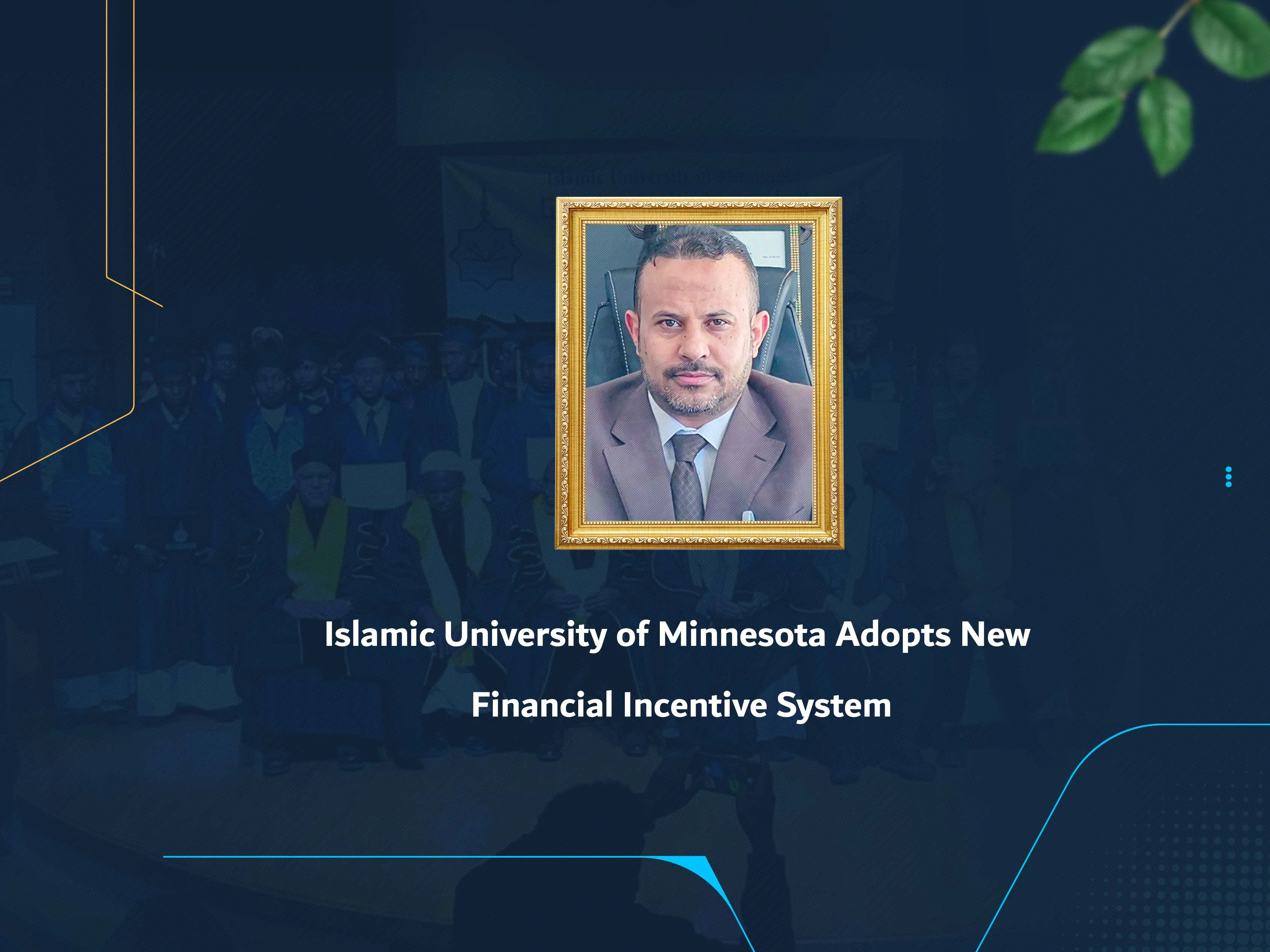
The Vice President of the Islamic University of Minnesota and Head of the Main Center, Dr. Omar Ahmed Al-Maqrami, has announced the adoption of a new financial incentive system for faculty members, effective from the first semester of the 2026–2027 academic year. This initiative reflects the University's ongoing commitment to strengthening its academic workforce, enhancing the university work environment, and promoting a culture of excellence, commitment, and high-quality teaching.
Dr. Al-Maqrami explained that the new system will be implemented across all colleges and academic departments in accordance with the University's approved regulations and policies. The system is designed to ensure fairness and equal opportunities in the distribution of financial incentives while organizing teaching workloads in a manner that enables broader faculty participation in the educational process and prevents an excessive concentration of course assignments among a limited number of faculty members.
As part of the University's digital transformation initiatives, Dr. Al-Maqrami also announced the launch of a new electronic service through the Academic Portal, allowing faculty members to voluntarily waive their financial incentives—including those related to teaching, academic supervision, thesis and dissertation examination committees, and other academic assignments—in favor of the University. The transaction will be processed instantly within the electronic system, reflecting the University's advanced level of digital integration and efficiency in managing financial services.
Dr. Al-Maqrami further emphasized that priority in appointing academic supervision and examination committee members will be given to faculty members who demonstrate outstanding teaching performance and consistent commitment to delivering their scheduled lectures on time. He also noted that the University has approved competitive financial incentives for academic supervision and participation in thesis and dissertation examination committees as part of its efforts to encourage academic excellence and reward distinguished performance.
He added that deans and department chairs will be responsible for assigning supervision and examination responsibilities in accordance with transparent and equitable standards, ensuring equal opportunities for all faculty members while preventing the concentration of these responsibilities among a limited group, thereby reinforcing institutional governance and fairness across the academic environment.
Dr. Al-Maqrami also encouraged faculty members with outstanding financial entitlements from previous academic periods to review their accounts through the Academic Portal, where these entitlements will appear under the Financial Entitlements section in preparation for the completion of payment procedures according to the schedules approved by the University's Administrative and Financial Affairs Department.
This announcement forms part of a broader package of institutional development initiatives undertaken by the Islamic University of Minnesota to enhance its academic and administrative systems, accelerate digital transformation, support faculty excellence, improve educational outcomes, and strengthen the University's culture of institutional quality and continuous improvement.