

Islamic University of Minnesota Launches New Update to Its Academic Portal
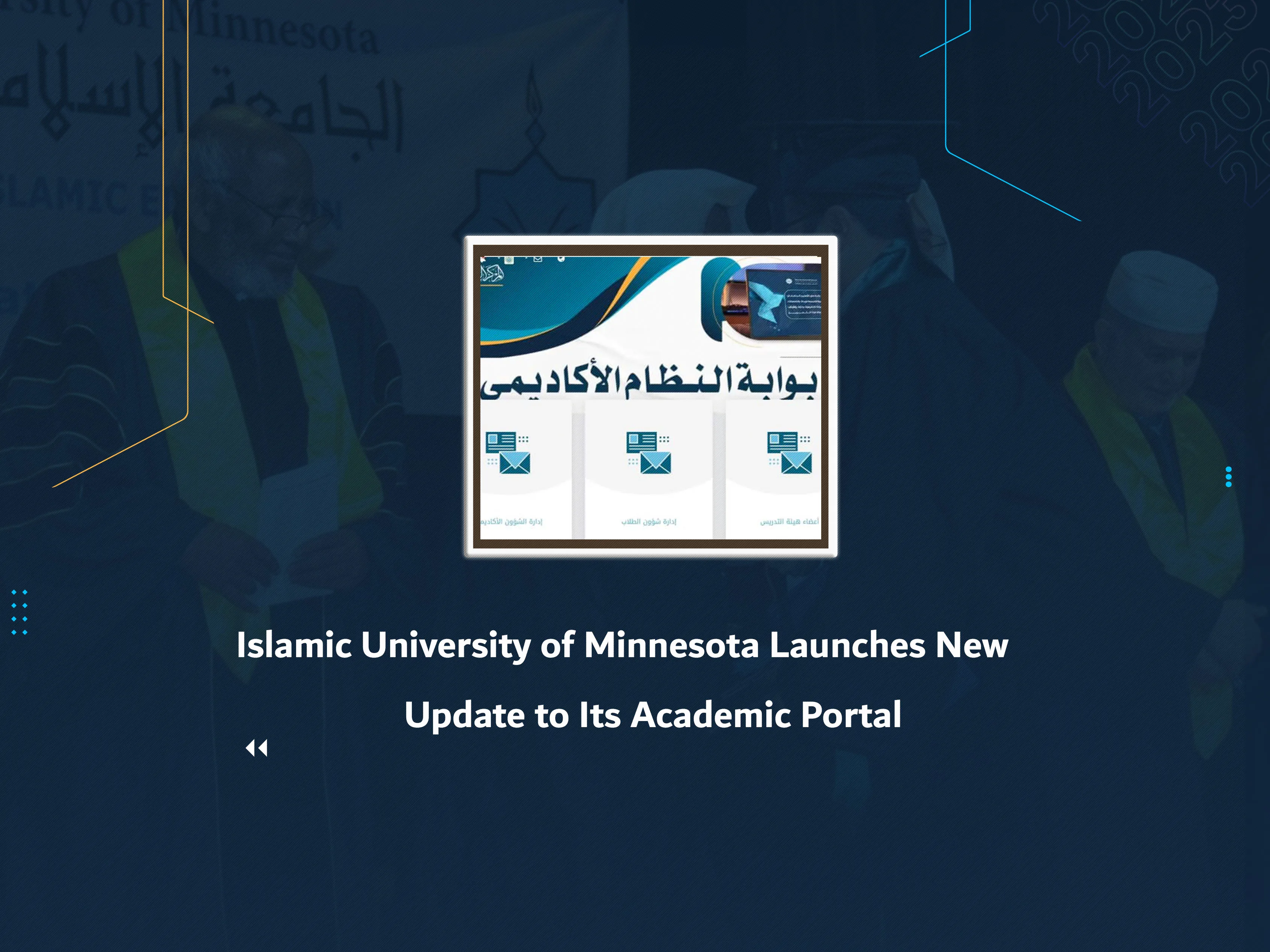
The Islamic University of Minnesota - Main Center has announced the launch of a new update to its electronic academic system portal, introducing interactive statistics and indicators related to faculty performance and the monitoring of the educational process. The update comes as part of the university’s ongoing efforts to enhance academic efficiency and strengthen monitoring and evaluation mechanisms within the institution.
Dr. Omar Ahmed Al-Maqrami, Vice President of the University and Head of the Main Center, explained in a post shared within the university faculty community group on WhatsApp that the new update provides interactive statistical tools designed to support the monitoring of academic and educational aspects related to faculty members, thereby improving the effectiveness of academic follow-up and evaluation across the university system.
Dr. Al-Maqrami also encouraged faculty members to regularly follow the electronic portal and benefit from the newly introduced services and updates, emphasizing their role in improving academic performance and advancing the educational process.
This development comes within the framework of the university’s broader vision to modernize its digital environment and enhance academic management tools in line with the requirements of e-learning and internationally recognized quality standards in higher education institutions.
In the same context, the update received positive feedback from several faculty members. Dr. Yousef bani Younes, Dean of the College of Development Studies, praised the initiative, affirming that it reflects the university administration’s commitment to developing the educational process and strengthening interaction between faculty members and the academic system.
He noted that the new update contributes to building a more efficient and transparent educational environment and supports the implementation of best university practices based on continuous communication and accurate academic performance monitoring, thereby enhancing educational outcomes and supporting institutional excellence.
Faculty members also reaffirmed their commitment to regularly following the electronic portal and engaging with the updates and services published through it, in a manner that supports the development of the educational process and the achievement of the university’s academic and developmental goals.
Through its electronic portal, the university continues to expand the scope of digital services provided to faculty members and students as part of its strategic direction toward digital transformation and the development of the technological infrastructure supporting education and training.