

Department of Judiciary Discusses Academic Development
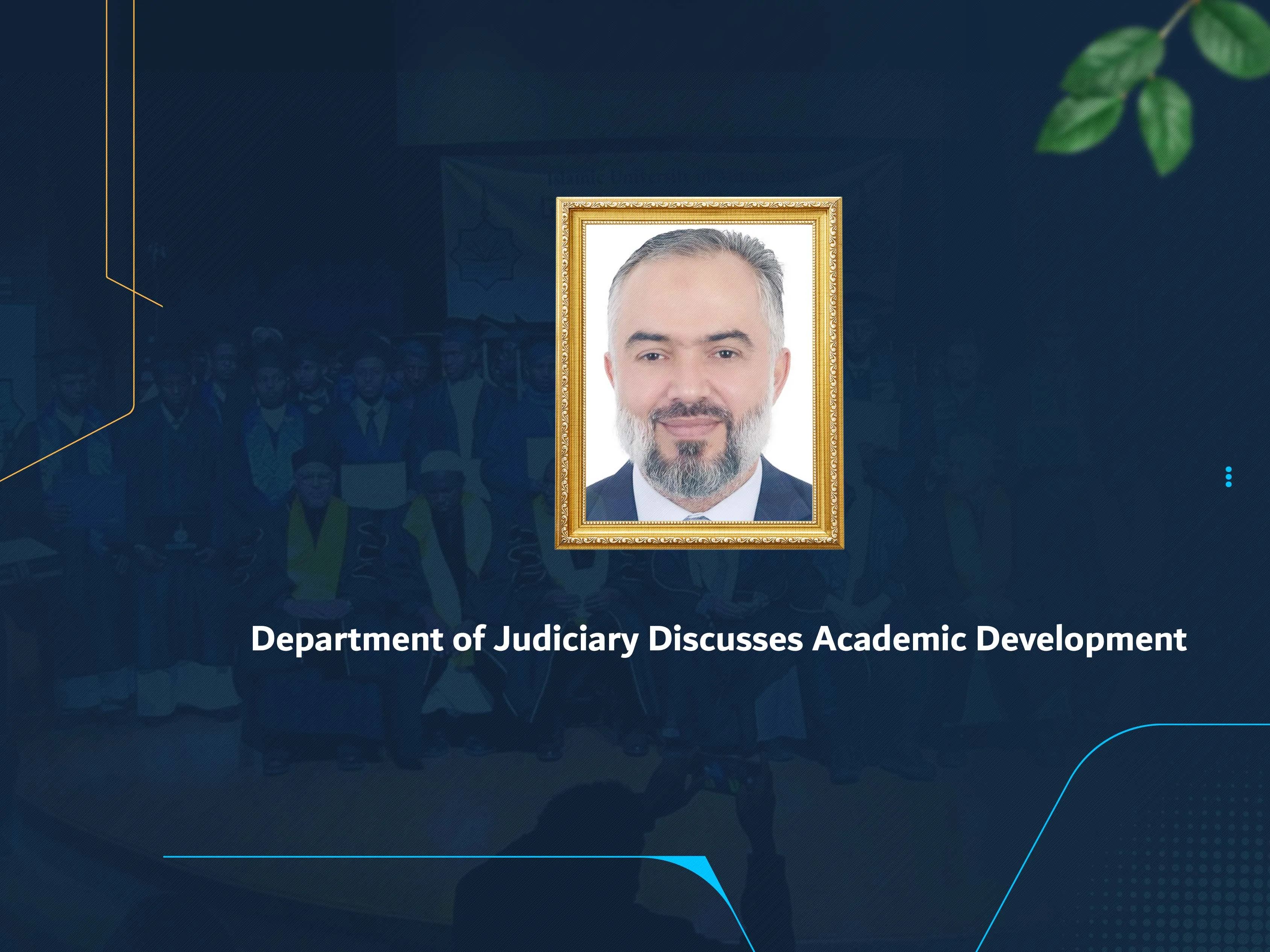
As part of its ongoing efforts to enhance the quality of the educational process and strengthen academic performance, the Department of Judiciary and Sharia Policy at the College of Sharia and Law, Islamic University of Minnesota - Main Center, held its regular departmental meeting chaired by Dr. Mohammed Al-Shaqaldi, Head of the Department, with the participation of faculty members. The meeting focused on a number of academic and administrative matters, reviewed developments in graduate studies and electronic services, and approved several recommendations aimed at advancing the Department's academic performance.
The meeting began with a review of the academic plan for the current semester. Dr. Al-Shaqaldi explained that the semester extends over fourteen weeks, with midterm examinations scheduled to begin on August 1, and final examinations commencing on September 26. He emphasized the importance of full compliance with the approved academic calendar to ensure the smooth implementation of the educational process.
The Department also approved the grading distribution for all courses as follows: 20% for attendance and class participation, 20% for the midterm examination, 20% for research papers and academic assignments, and 40% for the final examination. This distribution is intended to achieve an appropriate balance between continuous assessment and the measurement of students' academic achievement.
As part of its efforts to improve assessment practices and reduce students' academic workload, the Department recommended limiting each course to one major academic assignment, thereby enhancing the quality of coursework while avoiding unnecessary burdens on students.
Faculty members further emphasized that all examinations must be reviewed by the Head of the Department before receiving final approval, ensuring that assessment tools align with the intended learning outcomes and approved academic quality standards.
The meeting also reviewed the Department's electronic archive, which contains course specifications, academic plans, examination models, and instructional materials. Participants stressed the importance of utilizing these resources to improve the educational process and promote consistency in academic practices among faculty members.
As part of the University's digital transformation initiatives, participants discussed the services provided through the new electronic portal, including its academic, administrative, and financial features. They highlighted its role in streamlining procedures, strengthening communication between faculty members and the University, and improving the quality and efficiency of institutional services.
Regarding graduate studies, faculty members discussed procedures governing the supervision of theses and dissertations, emphasizing that official appointment letters must be issued before supervisors begin supervising graduate students in order to ensure compliance with University regulations. The meeting also considered a proposal to establish a clear timeframe for completing graduate research projects while emphasizing the importance of regular communication between students and their academic supervisors to improve research quality and facilitate timely completion.
Participants were also introduced to an initiative to launch a survey assessing graduate students' interaction with their academic supervisors. The survey is intended to support the continuous improvement of the academic supervision system, enhance the quality of graduate studies, and utilize the findings to strengthen academic performance.
Under faculty affairs, the meeting discussed financial entitlements for faculty members, emphasizing the importance of addressing issues related to the exclusion of the Sharia and Fiqh departments from teaching incentive payments in order to ensure fairness and equity across all academic departments.
The meeting concluded with several recommendations, including strict adherence to the approved academic calendar, the prompt submission of the remaining course specifications, verification of faculty data within the electronic portal, submission of examinations to the Department Head for review before approval, completion of the graduate student evaluation survey once it becomes available, and coordination with the Department Head for faculty members wishing to participate in thesis and dissertation defense committees.
Participants concluded by reaffirming the importance of strengthening collaboration among faculty members, promoting continuous academic improvement, and adhering to the University's regulations and policies. They emphasized that these efforts will contribute to fulfilling the Department's mission, enhancing its educational and research outcomes, and supporting the Islamic University of Minnesota's ongoing pursuit of academic excellence.