

Research Center Organizes Specialized Training Course in Proofreading
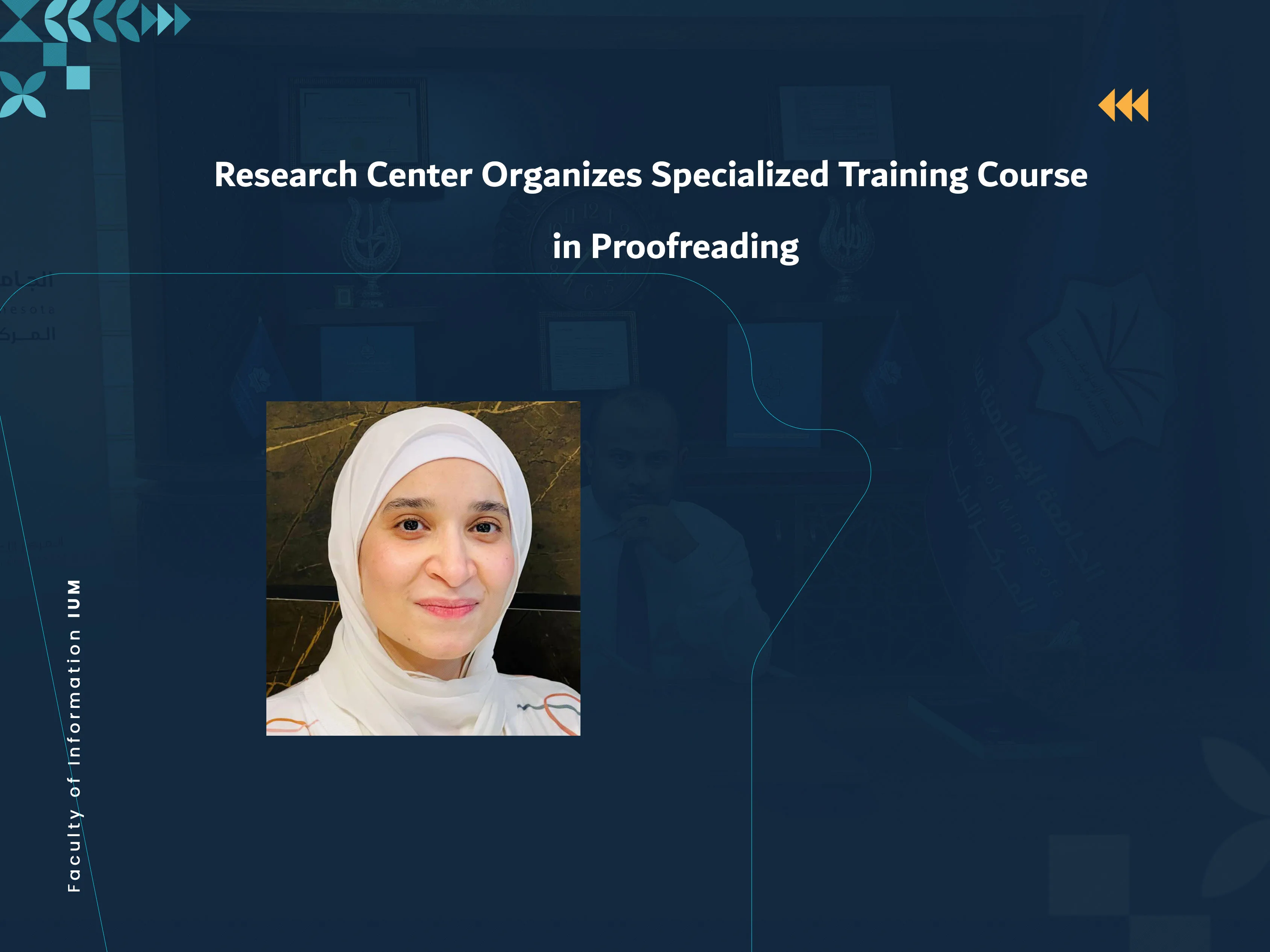
The Research and Studies Center at the Islamic University of Minnesota - Main Center organized a specialized practical training course entitled: "Your Path to Professional Proofreading and Avoiding
Common Mistakes in Scientific Research," as part of its ongoing efforts to develop researchers’ skills and enhance the quality of academic and scientific writing.
The course was delivered by Dr. Nadia Hisham and moderated by Dr. Musa Al-Daw. It was held over three hours on Thursday evening via the Zoom platform, with the participation of individuals interested in scientific research, the Arabic language, and linguistic proofreading.
The course focused on the importance of proper Arabic language usage in writing theses and scientific research papers, emphasizing its role in improving the quality of academic content and ensuring precision in scholarly writing, in addition to developing the fundamental skills associated with sound academic research writing.
The training also covered several practical topics, including common Arabic spelling problems and methods of addressing them through creative thinking approaches, rules of scientific writing, and the impact of spelling accuracy on the integrity of academic documents. Additional topics included essential Arabic language skills, sentence structures, punctuation marks, principles of technical and linguistic proofreading, and documentation styles used in academic writing.
Furthermore, the course reviewed the most common linguistic and grammatical errors found in scientific research, while presenting practical examples and applied methods to help researchers avoid such mistakes, thereby contributing to the improvement of academic writing standards and the professional presentation of research work.
The Research and Studies Center affirmed that this course is part of a series of specialized training programs aimed at supporting researchers, students, and faculty members, while enhancing their scientific and linguistic competencies in line with the requirements of rigorous scientific research and modern academic quality standards.