

Researcher Idris Olamilekan Awarded PhD Degree
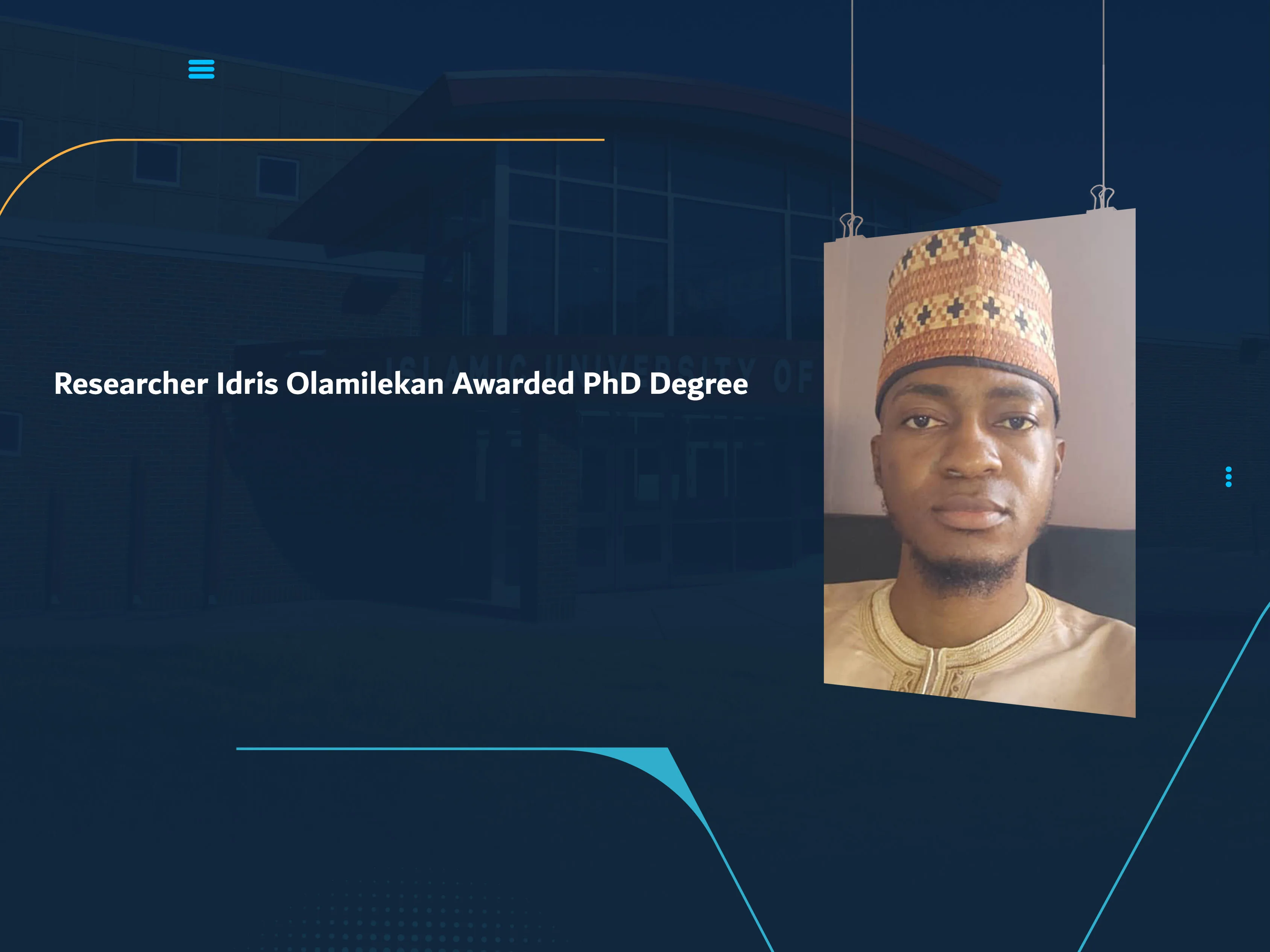
The Deanship of Graduate Studies and Scientific Research at the Main Center of the Islamic University of Minnesota discussed a doctoral dissertation addressing one of the significant topics in the field of Islamic legal theory and juristic reasoning, offering a scholarly contribution to the study of discretionary legal proofs and their applications in inheritance matters.
Researcher Idris Abdulrahman Olamilekan presented his dissertation entitled "The Juristic Distinctions Between Istihsan and Maslahah Mursalah and Their Applications in Inheritance Issues" in partial fulfillment of the requirements for obtaining a Ph.D. degree from the Department of Fiqh and Its Foundations at the College of Sharia and Law.
The dissertation aimed to examine the methodological and juristic distinctions between Istihsan (juristic preference) and Maslahah Mursalah (unrestricted public interest), which are among the most prominent instruments of legal reasoning in Islamic jurisprudence. The study highlighted the points of convergence and divergence between the two principles and explored their impact on deriving legal rulings related to inheritance matters.
The research also analyzed a number of juristic applications of these two principles in inheritance issues, reviewing the approaches adopted by scholars in employing them to achieve the objectives of Islamic law and safeguard the interests of those concerned. The study demonstrated the flexibility of Islamic jurisprudence and its capacity to address emerging issues within a framework governed by established legal principles and foundations.
The examination committee consisted of Dr. Salah Faraj, Head of the Department of Fiqh and Its Foundations at the Islamic University of Minnesota, who served as Chair of the Committee; Dr. Mohammed Amin Mohammed, Dissertation Supervisor; Dr. Murad Ouda, Internal Examiner; and Dr. Amal Ghoniem, External Examiner.
The dissertation defense was held virtually on Sunday, June 7, 2026, with the attendance of faculty members, researchers, and graduate students interested in jurisprudential and legal-theoretical studies.
Commenting on the university’s academic and research achievements, Dr. Zainab Ali Basyouni, Vice Deputy Rector of the University, expressed pride in the accomplishments of the university’s students and graduates across different countries, noting that they serve as ambassadors of knowledge, scholarship, and academic excellence.
She added that the achievements of the university’s graduates affirm that its mission extends beyond awarding academic degrees to preparing qualified professionals capable of making a positive impact in their communities and contributing to the dissemination of knowledge and service to their nations. She emphasized that their successes reflect the quality of the university’s academic and research programs and embody its mission of developing highly competent scholars and professionals dedicated to community service and sustainable development.
This dissertation reflects the Islamic University of Minnesota’s commitment to supporting specialized Sharia-based research that combines sound theoretical foundations with practical application, enriches the fields of Islamic jurisprudence and legal theory, and strengthens the role of scientific research in addressing contemporary issues in light of the objectives of Islamic law.