

Department of Holy Quran Holds Academic Meeting
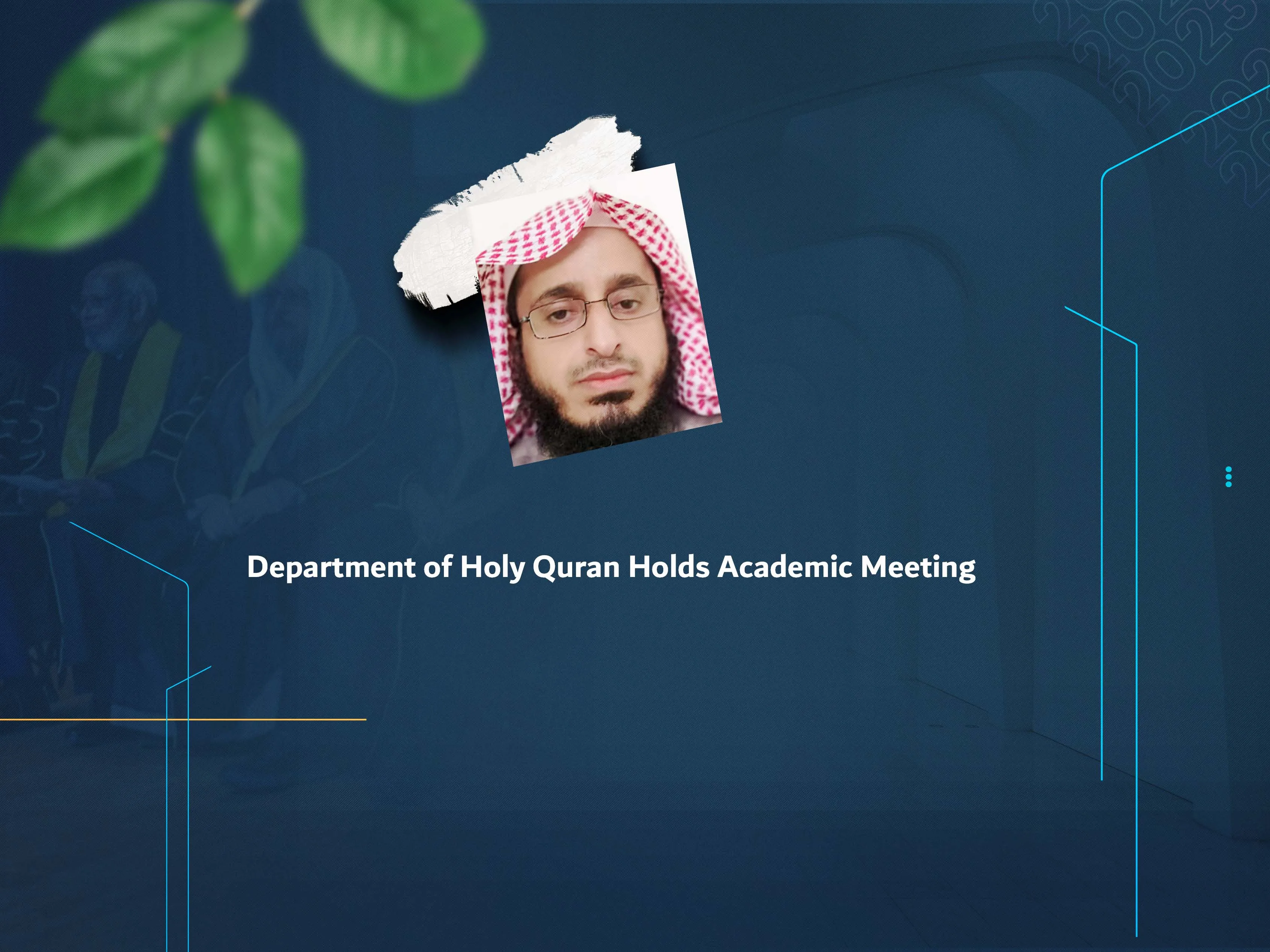
As part of its commitment to strengthening direct communication with its students and enhancing the learning environment, the Department of the Holy Qur’an and Its Sciences at the College of Islamic Studies, Islamic University of Minnesota - Main Center, held an academic meeting with undergraduate students, chaired by Dr. Majed Al-Harbi, Head of the Department. The meeting focused on discussing a number of academic and educational matters while providing students with an opportunity to share their views and suggestions to further improve the quality of teaching and learning.
At the beginning of the meeting, Dr. Al-Harbi congratulated the students on the start of the new academic semester and warmly welcomed them to the Department. He emphasized that specializing in the sciences of the Holy Qur’an is a noble academic mission that requires sincerity, dedication, and perseverance in the pursuit of knowledge. He encouraged students to make the best use of their years of study in order to build a solid academic foundation that will prepare them to serve the Holy Qur’an and its sciences.
Dr. Al-Harbi urged students to recognize the significance of their academic responsibility, manage their time effectively, and avoid factors that could hinder their academic progress. He also highlighted the importance of academic collaboration among students through sharing lecture notes and learning materials, as well as exchanging knowledge through available educational platforms to maximize collective learning and lasting benefit.
The Head of the Department noted that the Muslim Ummah is in continuous need of highly qualified specialists in the sciences of the Holy Qur’an. He stressed that this places a greater responsibility on students to pursue academic excellence and prepare themselves to contribute meaningfully to the study and service of the Qur’an through sound scholarly foundations.
The meeting also addressed the importance of maintaining a respectful academic relationship between students and faculty members. Dr. Al-Harbi emphasized the need to appreciate the efforts of faculty members and to communicate suggestions or concerns through official channels in a professional and constructive manner, thereby fostering a culture of respectful dialogue and continuous academic improvement.
Dr. Al-Harbi listened to students' questions and observations regarding several academic matters, including the need for greater sequencing and integration among certain courses, the challenges resulting from insufficient prerequisite knowledge, and questions concerning the approved references used in examinations. He affirmed that the Department gives these observations serious consideration and is working closely with faculty members and the relevant academic authorities to review them as part of its ongoing efforts to improve the curriculum and enhance learning outcomes.
He also clarified that examinations are based primarily on the instructional content delivered by faculty members during lectures, together with the officially approved teaching materials. While prescribed textbooks and references serve as important resources for further reading and academic enrichment, they do not replace the officially designated course content.
As part of strengthening the partnership between the Department and its students, Dr. Al-Harbi emphasized that the Department's leadership remains committed to receiving students' questions and suggestions through official communication channels. He encouraged students to communicate directly with the Department whenever they encounter academic challenges so that appropriate support can be provided promptly and an effective learning environment can be maintained.
The meeting concluded by reaffirming several principles that contribute to academic success, including renewing one's intention in the pursuit of knowledge, maintaining diligence and commitment throughout the semester, strengthening academic cooperation among students, respecting faculty members, relying on the approved course materials when preparing for examinations, and submitting academic feedback through official channels. Dr. Al-Harbi concluded by wishing all students continued success and reaffirmed the Department's commitment to providing comprehensive academic support and fostering a motivating educational environment that promotes excellence in learning and scholarship.