

Department of Holy Qur'an and Its Sciences Holds Academic Meeting
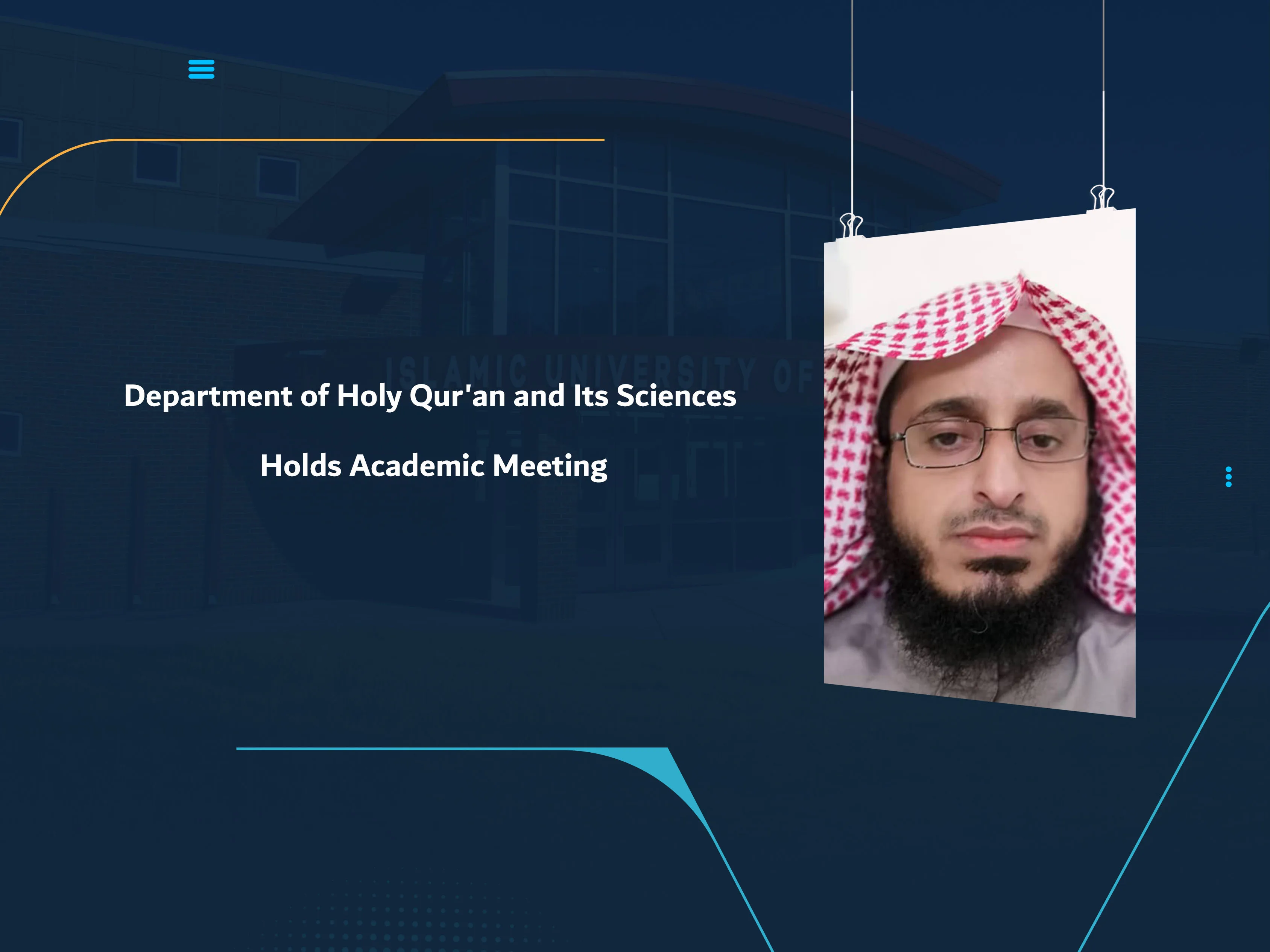
As part of its preparations for the launch of the 2026–2027 academic year, the Department of the Holy Qur'an and Its Sciences at the College of Islamic Studies, Islamic University of Minnesota - Main Center, held an academic meeting on Thursday evening, June 18, 2026, chaired by Dr. Majed Al-Harbi, Head of the Department, with the participation of faculty members. The meeting focused on discussing a range of academic and administrative matters aimed at enhancing the quality of performance and ensuring a successful start to the first academic semester.
At the beginning of the meeting, Dr. Al-Harbi emphasized the importance of academic discipline and strict adherence to lecture schedules, describing punctuality as one of the fundamental pillars of a successful educational process. He also stressed the need for faculty members to notify the Department in advance of any unforeseen circumstances that might prevent them from delivering their lectures on time, thereby ensuring continuity of instruction and minimizing any disruption to students.
The meeting also addressed graduate studies, highlighting the importance of maintaining rigorous academic standards in supervising postgraduate research and encouraging the selection of original research topics that make meaningful scholarly contributions. Participants further emphasized the need to establish clear timelines for the completion of theses and dissertations in order to enhance research quality and strengthen the Department's academic standing.
In support of faculty development, the meeting reviewed several issues related to academic promotions, peer-review honoraria, and authorship incentives. Dr. Al-Harbi affirmed his commitment to following up on these matters with the relevant University authorities and working to address any challenges faced by faculty members, thereby supporting their academic careers and encouraging continued scholarly productivity.
The meeting also discussed the technological aspects of managing the educational process, including the effective use of the University's electronic portal for course administration. Participants emphasized the importance of organizing training sessions and providing instructional guides and support materials to enhance faculty members' proficiency in using the University's digital systems, in line with the University's vision of advancing digital education.
The meeting concluded with a reaffirmation of the importance of teamwork, continuous communication, and close cooperation between the Department administration and faculty members. Participants stressed that these principles are essential for enhancing academic and research performance, fulfilling the mission of both the Department and the College, and delivering an outstanding educational experience throughout the new academic year.