

College of Development Studies Announces New Academic Initiatives
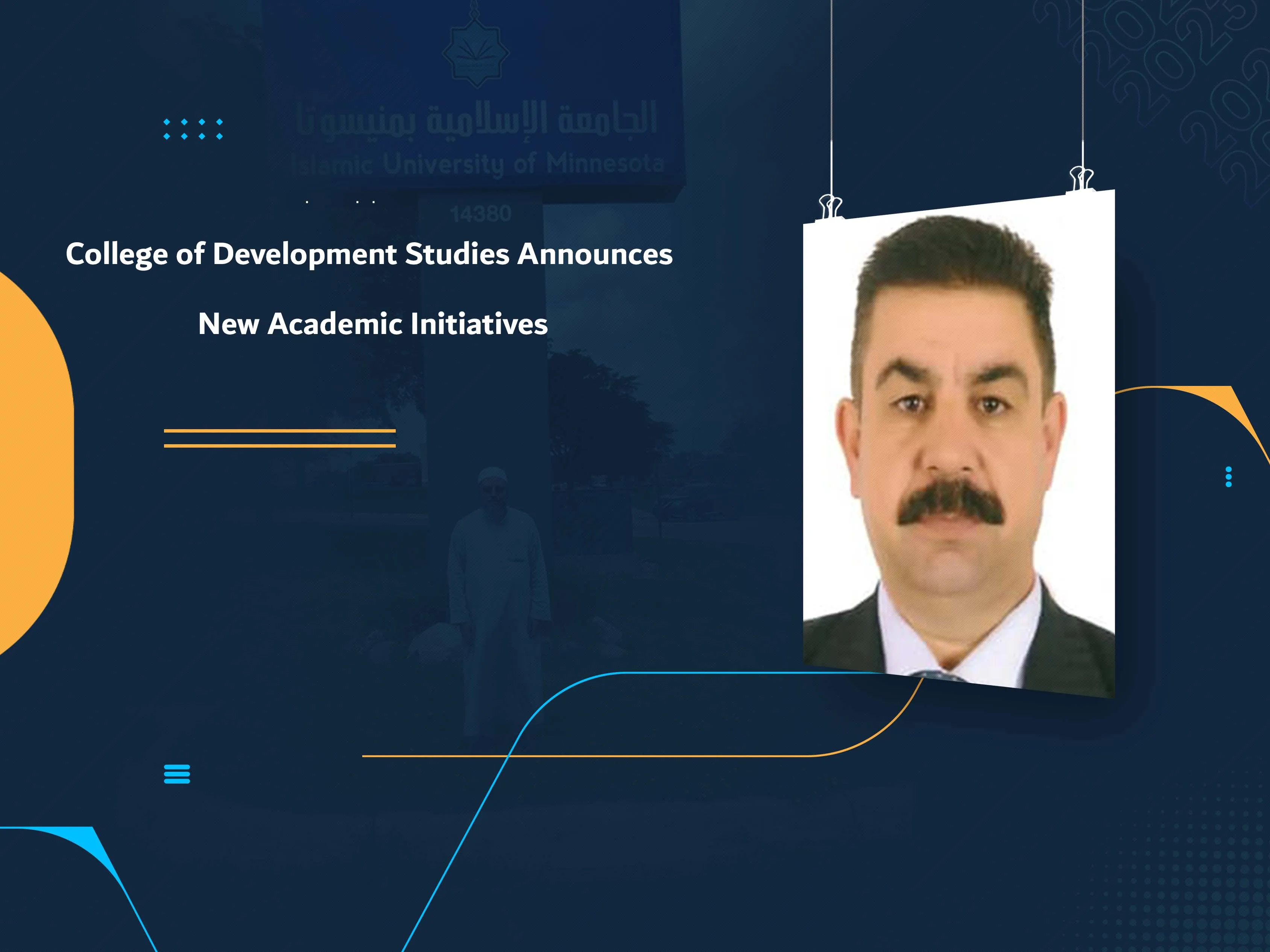
As part of its ongoing commitment to advancing its academic and research programs, the College of Development Studies at the Islamic University of Minnesota - Main Center held an extensive academic meeting chaired by Dr. Yousef Bani Younes, Dean of the College, with the participation of the Vice Dean, department heads and their deputies, and faculty members. The meeting focused on reviewing academic developments, discussing strategic plans, and approving a series of initiatives and decisions aimed at enhancing the quality of education, strengthening scientific research, and promoting innovation.
During the meeting, the College reviewed its major achievements over the past three years, highlighting its remarkable academic growth and institutional expansion. The College now comprises four active academic departments staffed by more than thirty faculty members holding doctoral degrees, in addition to a distinguished group of master's degree holders, reflecting the College's continuous development at both the academic and administrative levels.
The College also confirmed the successful launch of the Department of Nonprofit Organizations and the Department of Relief and International Development, both of which have begun offering their academic programs through the University's regular and self-paced learning systems. This expansion is intended to meet the evolving needs of students while aligning with contemporary trends in higher education.
As part of its strategy to strengthen its international academic presence, the College announced its readiness to launch English-medium instruction for students of various nationalities, particularly within the Department of Nonprofit Organizations. This initiative follows the recruitment of a distinguished team of faculty members to deliver the program and is expected to broaden the College's international outreach and attract a more diverse student body.
Dr. Yousef Bani Younes emphasized the importance of conducting lectures according to the approved academic schedule, noting that regular class attendance is one of the most important indicators of educational quality. He urged faculty members to minimize the use of make-up lectures except in exceptional circumstances to ensure the stability of the study plan and the successful achievement of its objectives.
Regarding graduate studies, participants reaffirmed the importance of maintaining systematic academic supervision of Master's and PhD students through periodic reports documenting each student's academic and research progress. This approach is intended to enhance the quality of supervision and improve research outcomes.
The meeting also placed significant emphasis on supporting scholarly productivity. The College renewed its call for faculty members to author specialized academic textbooks and announced the continuation of its university textbook project based on approved course specifications, beginning with undergraduate programs. The initiative aims to enrich academic content and strengthen educational resources.
In support of scientific research, the College unveiled plans to establish a peer-reviewed academic journal in Development Studies, which will provide researchers and faculty members with a reputable platform for publishing scholarly work in accordance with international academic standards while encouraging high-quality research and academic publishing.
The meeting further addressed the academic promotion system, emphasizing the continued work of the College Promotion Committee in coordination with the University's Central Promotion Committee. Participants discussed following up on promotion applications submitted by eligible faculty members in order to support their academic careers and encourage scholarly excellence.
To strengthen academic collaboration within the College, participants reviewed the Books and Curriculum Repository Project, which aims to establish a shared knowledge repository containing textbooks, academic references, course materials, and study plans. Faculty members were encouraged to contribute their publications and educational resources to enrich the repository and promote knowledge sharing across the College.
The meeting also included an orientation program for newly appointed faculty members, covering academic and administrative procedures, the process for receiving course-related financial entitlements, teaching methods within both the regular and self-paced learning systems, and the approved assessment procedures for each mode of study. The program was designed to ensure consistency in academic practices and enhance institutional effectiveness.
In addition, the meeting provided an opportunity for faculty members to exchange ideas and professional experiences, address academic and administrative inquiries, and discuss a range of issues that contribute to strengthening the institutional work environment and ensuring the College's readiness for a successful new academic year.
The meeting concluded with the announcement of the appointment of Dr. Muhannad Sami as Chair of the Department of Nonprofit Organizations. Faculty members congratulated him on his new position and wished him success in leading the Department. Participants reaffirmed their commitment to teamwork, strengthening collaboration among the College's departments, and continuing to develop its academic and research programs in support of the University's mission to prepare highly qualified professionals capable of contributing to sustainable development and serving communities.