

College of Computer Science Holds Council Meeting
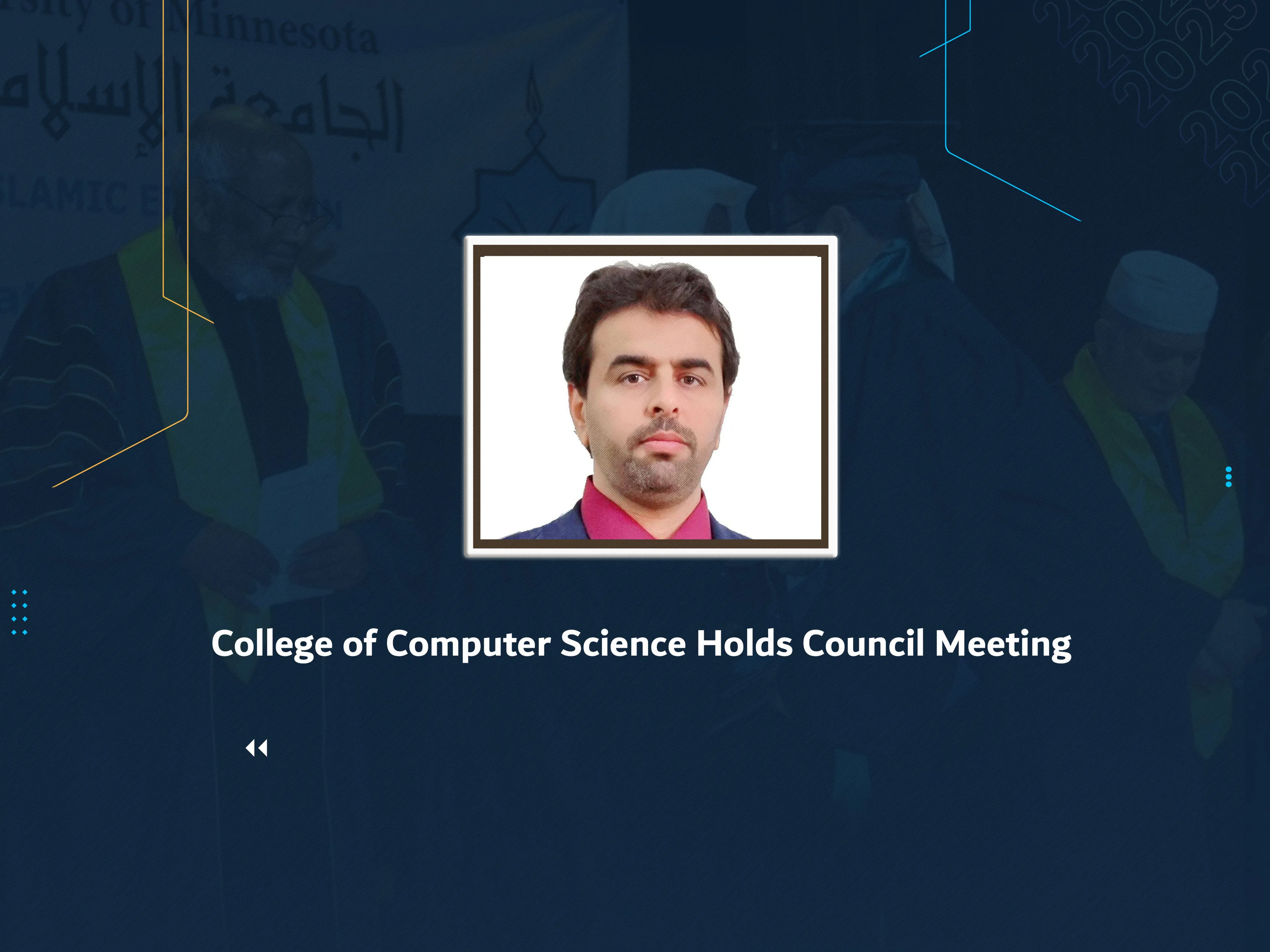
The College of Computer Science and Information Technology at the Islamic University of Minnesota - Main Center - held its College Council meeting in preparation for the first semester of the 2026–2027 academic year. The meeting was chaired by the Vice Dean of the College, Dr. Salah Alawi Hussein Al-Sharafi, and attended by department heads, faculty members, and representatives of the administrative affairs office as part of the College’s early preparations to ensure a successful start to the new academic semester and to further enhance the quality of the educational process.
At the outset of the meeting, Dr. Al-Sharafi welcomed the participants and commended the dedicated efforts of the faculty members in supporting the College’s academic mission and advancing its performance. He also extended a warm welcome to the newly appointed faculty members, expressing his confidence that they would contribute significantly to strengthening the academic environment and promoting excellence across the College’s programs and disciplines.
The Council reviewed the College’s vision, strategic objectives, and academic plan for the upcoming semester, emphasizing the importance of adhering to the approved academic framework and following an institutional approach that ensures high-quality learning outcomes aligned with accreditation requirements and standards of academic excellence.
The meeting also discussed class schedules and the allocation of courses among faculty members in a manner that balances departmental needs with instructional requirements. Participants reaffirmed the importance of complying with approved academic regulations and institutional policies to enhance operational efficiency and improve educational outcomes.
As part of the College’s digital transformation initiatives, the Council examined strategies for integrating e-learning platforms into the teaching process. Discussions focused on the electronic management of courses, the effective activation of digital learning systems, and maximizing the use of available educational services to enrich students’ learning experiences and strengthen academic interaction between faculty members and students.
In addition, the meeting addressed quality assurance and academic accreditation requirements, including the preparation and updating of course files in accordance with approved standards and procedures. The Council stressed the importance of completing these requirements as part of the College’s commitment to continuous improvement and institutional development.
The Council further highlighted the significance of scientific research, community engagement, and student activities, encouraging faculty members to increase their participation in research projects, community initiatives, and extracurricular programs that contribute to student development and strengthen the University’s connection with societal needs.
The meeting also featured an open discussion between faculty members and the College administration, during which participants presented a number of proposals and recommendations related to academic operations and the working environment. These ideas were reviewed in a collaborative atmosphere characterized by a shared commitment to institutional excellence and continuous improvement.
At the conclusion of the meeting, the Council adopted several key recommendations and decisions, including strict adherence to approved academic policies, timely completion of quality assurance requirements and course documentation, full implementation of e-learning platforms across all courses, continued support for scientific research, community service, and student activities, and enhanced coordination between the College administration and faculty members to ensure the successful execution of the academic plan according to the established schedule.
The meeting concluded on a positive and constructive note, reflecting the strong sense of responsibility and commitment shared by the College leadership and faculty members, as well as their collective determination to ensure a successful academic semester and uphold the highest standards of quality and academic excellence in line with the University’s mission and strategic objectives.