

PhD Seminar Examines Arbitration System in Somalia
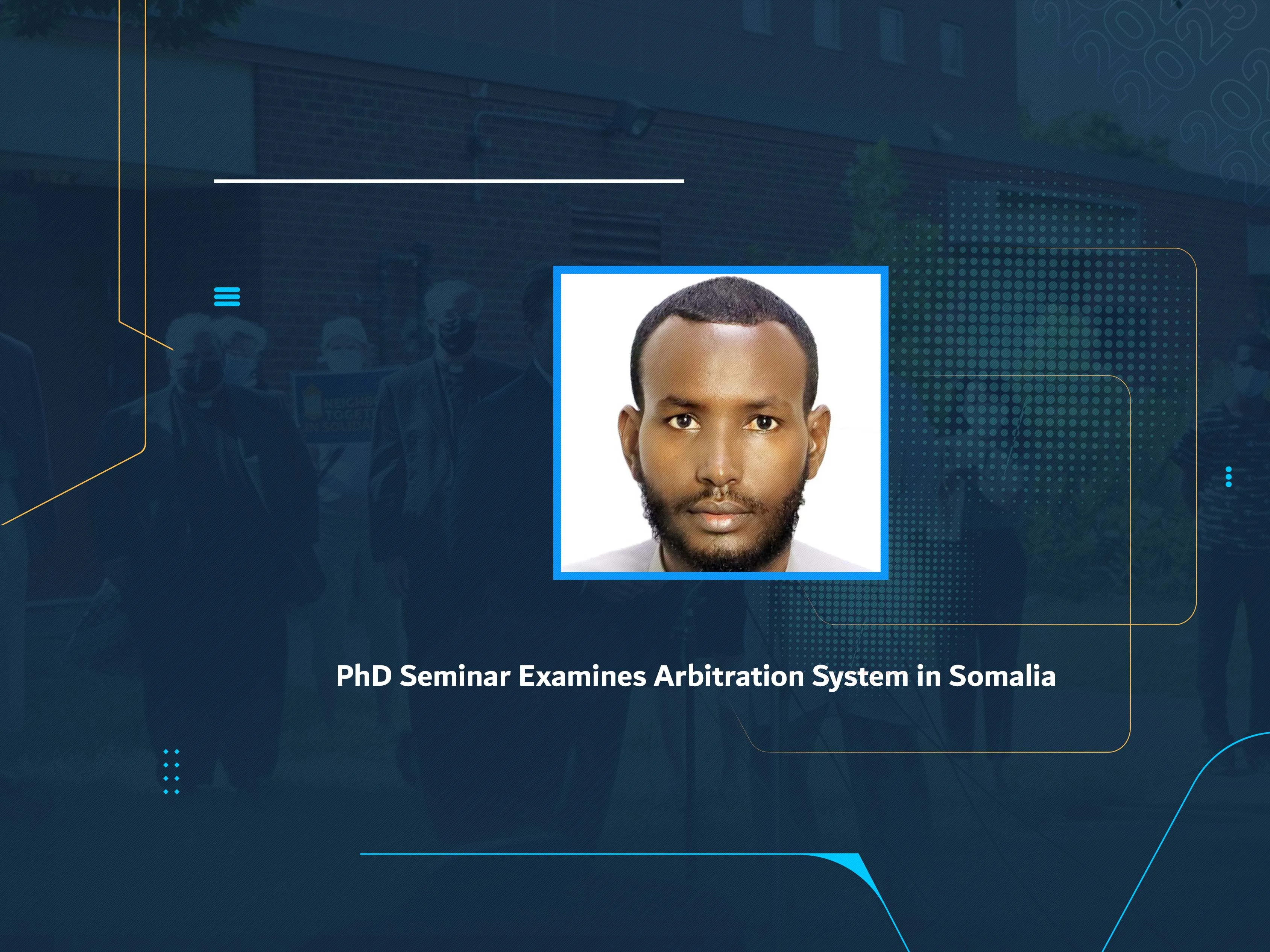
The Deanship of Graduate Studies at the Islamic University of Minnesota - Main Center organized a scientific seminar at the College of Sharia and Law to discuss the research proposal submitted by doctoral researcher Ali Mohammed Omar, a PhD student in the Department of Judiciary and Sharia Policy, entitled "The Arbitration System in Somalia: A Study of Its Legislation and Judicial Applications in Light of Islamic Sharia, Somali Law, and Tribal Custom." The seminar was held as part of the University’s efforts to support scientific research and enhance the quality of its graduate programs.
The seminar addressed the main components of the research proposal, which seeks to examine the arbitration system in Somalia from a comparative academic perspective by analyzing relevant legislative frameworks and judicial practices, as well as exploring the interaction between the principles of Islamic Sharia, Somali law, and tribal customs. The study aims to provide an integrated scholarly analysis of the system and highlight its jurisprudential, legal, and practical dimensions.
The discussion committee was chaired by Dr. Mohammed Al-Shagaldi, Head of the Department of Judiciary and Sharia Policy, with Professor Dr. Najwa Qaraqish, Dr. Mohammed Al-Hasban, and Dr. Khalil Al-Taher Al-Darwish serving as committee members. The committee reviewed various elements of the proposal, including its objectives, research problem, methodology, and academic structure, and provided a number of scholarly observations and methodological recommendations aimed at developing the research and strengthening its academic value.
The seminar featured an in-depth academic dialogue highlighting the significance of arbitration as an important means of dispute resolution, with particular attention to the distinctive Somali context and the interaction among Sharia-based, legal, and customary sources of authority. This context gives the study considerable academic and practical significance in the fields of judiciary and Sharia policy.
The seminar concluded with a number of scholarly recommendations and methodological guidelines intended to enrich and refine the research proposal in preparation for the subsequent stages of the study in accordance with established academic standards.
The seminar forms part of the academic activities organized by the Islamic University of Minnesota to support researchers and graduate students, promote academic dialogue, and strengthen rigorous research practices, thereby contributing to the advancement of graduate programs and the enrichment of specialized academic knowledge.