

Doctoral Dissertation on Treatment Between Islamic Jurisprudence and Custom
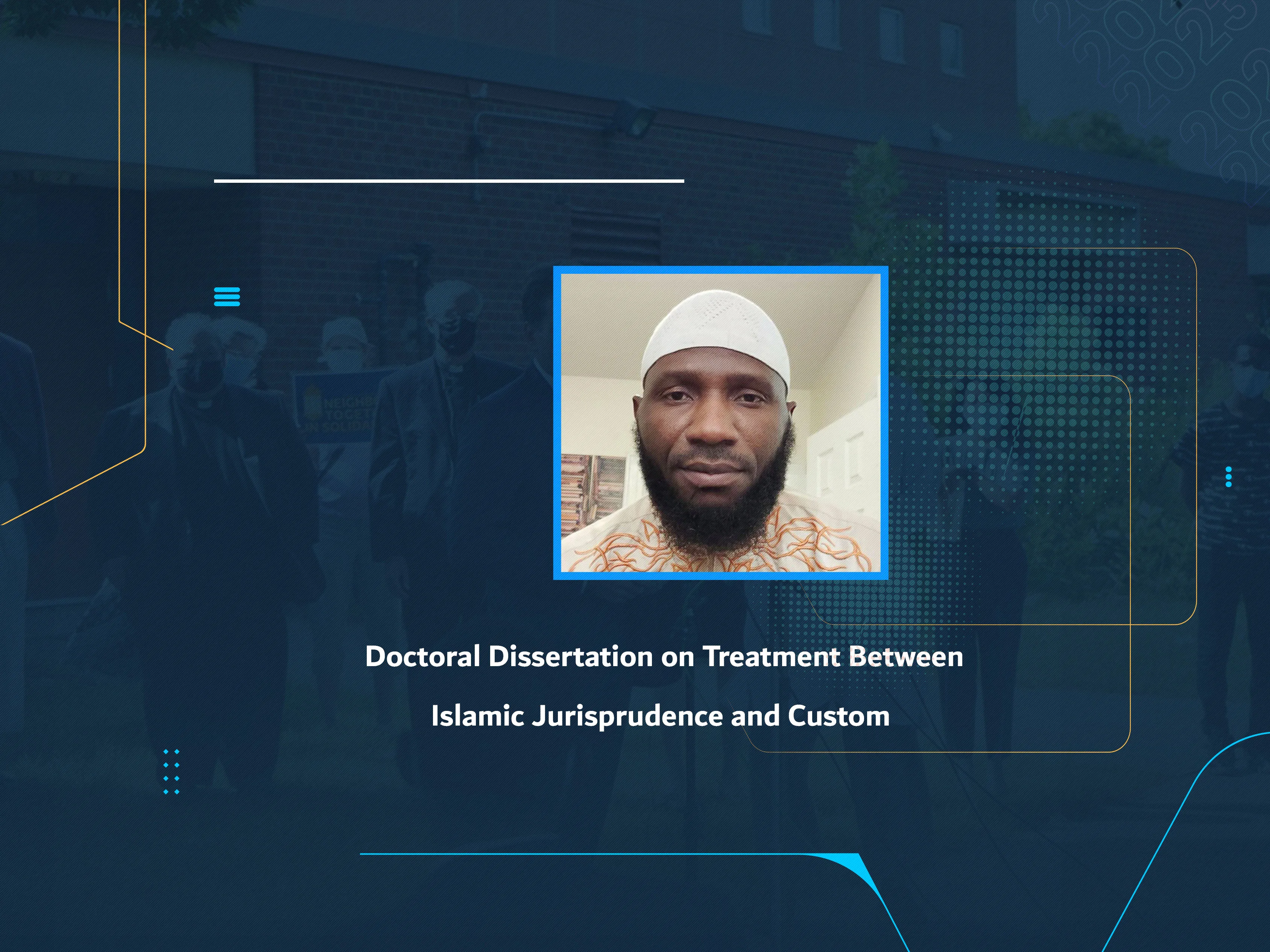
The College of Sharia and Law at the Islamic University of Minnesota - Main Center witnessed, on Sunday evening, May 10, 2026, the academic defense of a doctoral dissertation submitted by researcher Olokoli Ali from the Department of Fiqh and Its Foundations, entitled: "Treatment Between Islamic Jurisprudence and Custom in the Republic of Benin."
The defense was held under the supervision of the Deanship of Graduate Studies and Scientific Research via the Zoom platform, with the attendance of academics interested in comparative Islamic jurisprudence and issues related to customs and traditions within African Muslim societies.
The dissertation examined the relationship between Islamic jurisprudential rulings and customary practices related to treatment and healing in the Republic of Benin, while exploring the extent to which prevailing customs are compatible with the objectives and rulings of Islamic Sharia. The study also reviewed the jurisprudential dimensions associated with traditional and contemporary therapeutic practices in Beninese society.
The discussion committee was chaired by Dr. Salah Faraj, Head of the Department of Fiqh and Its Foundations at the university, while Dr. Abdulrazzaq Sanad served as the dissertation supervisor. The committee also included Dr. Hamza Qutaish as the internal examiner and Dr. Saqr Sheikh Hassan as the external examiner.
The session featured an academic discussion addressing the research methodology and the importance of the topic in connecting Islamic jurisprudential studies with social and cultural realities, in addition to several scholarly observations that enriched the dissertation and strengthened its intellectual and methodological dimensions.
This dissertation defense reflects the College of Sharia and Law’s commitment to supporting scientific research that addresses jurisprudential issues related to diverse Muslim societies and seeks to employ Islamic studies in addressing contemporary real-life challenges through a balanced scholarly perspective that combines authenticity with the demands of modern reality.