

Specialized Training Series Enhances Scientific Peer Review Skills
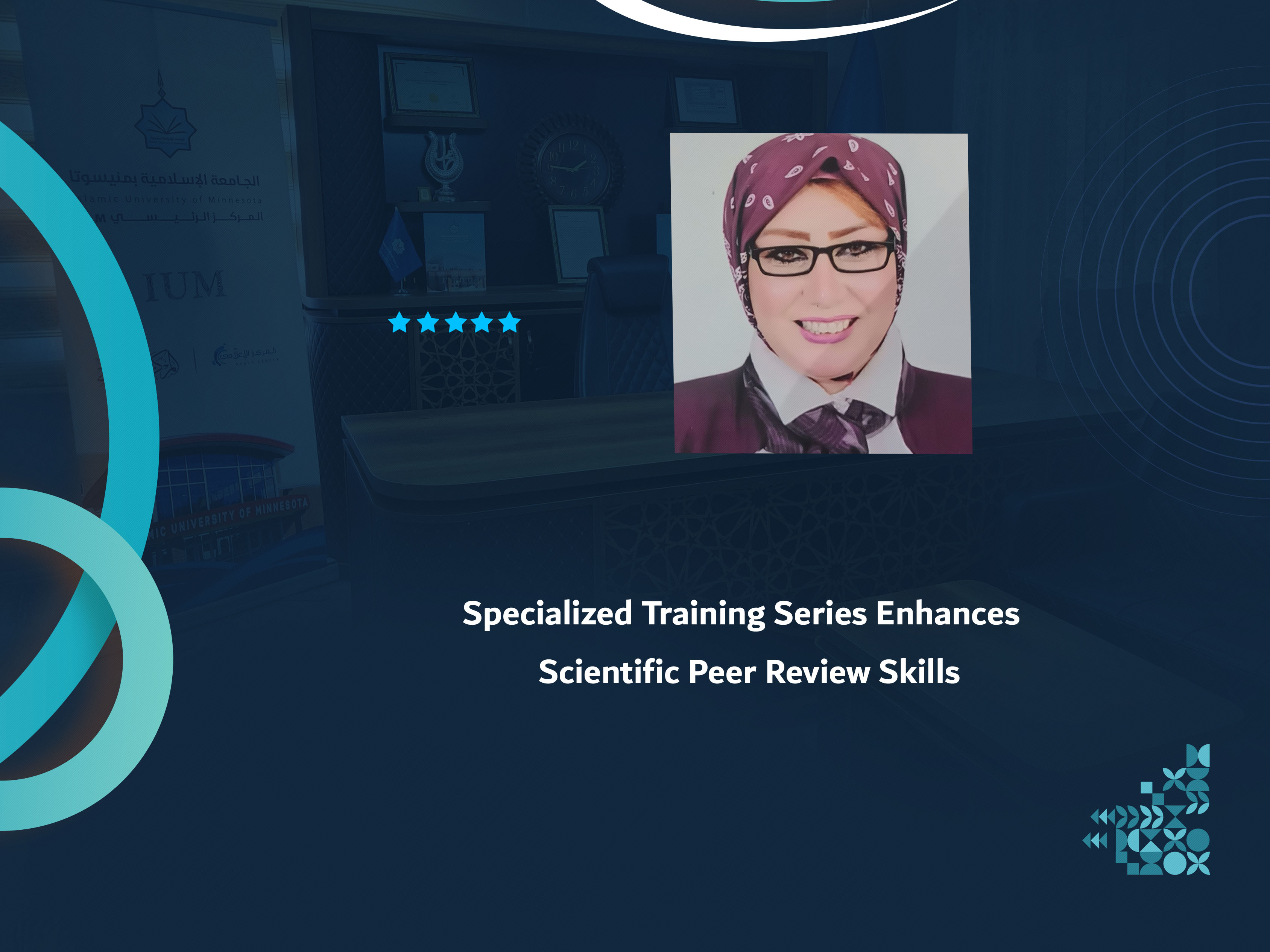
The Research and Studies Center at the Islamic University of Minnesota - Main Center - organized a specialized training series titled “Peer Review of Scientific Journals in the Era of Globalization and Digital Transformation,” with the participation of a distinguished group of academics and researchers. This initiative comes as part of the Center’s ongoing efforts to strengthen research competencies and elevate the quality of scientific peer review in line with the latest international standards.
The series witnessed notable attendance from individuals interested in scientific research and academic publishing. It aimed to develop participants’ capabilities by equipping them with professional skills in reviewing scientific papers, familiarizing them with the principles of evaluating studies according to the standards of peer-reviewed journals, and keeping pace with the rapid digital transformations shaping the academic landscape.
The training program featured two academic lectures. The first lecture, delivered by Dr. Fida'a Mansour Al-Jawhari, focused on mastering the fundamentals of scientific peer review. She highlighted key review criteria, methods for assessing research quality, and common mistakes to avoid when evaluating academic studies.
The second lecture, presented by Dr. Shaima'a Al-Arabi, addressed scientific peer review in the age of artificial intelligence. It shed light on the challenges and opportunities posed by AI technologies in the preparation and evaluation of research, while also discussing ways to effectively utilize these tools to enhance academic integrity and improve the quality of scholarly publishing.
The training sessions were conducted via the Zoom platform and witnessed strong engagement from participants, whose contributions and inquiries enriched the discussions and created a dynamic and interactive academic environment.
This initiative aligns with the Center’s vision of building an advanced scientific community and preparing researchers to actively contribute to high-quality scholarly publishing, thereby strengthening their academic presence and enhancing research output across various disciplines.