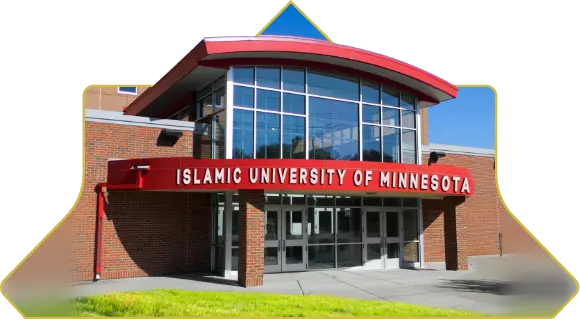

About the Department
The Department of Creed and Contemporary Schools of Thought, with its three academic levels—Bachelor’s, Master’s, and Doctorate—is one of the academic departments within the College of Islamic Studies at the Islamic University of Minnesota.
The department was established with the establishment of the college and, since its inception, has pursued an authentic academic mission centered on the study of Islamic creed and the systematic grounding of its concepts, as well as introducing students to religions, sects, schools of thought, and contemporary intellectual trends. This is pursued within an academic framework that combines authenticity with contemporary perspectives and responds to the requirements of academic knowledge and the intellectual issues of the modern era.
The department offers specialized educational and research programs that contribute to developing Islamic and intellectual knowledge and enhancing students’ research, analytical, and critical thinking skills, while adhering to academic quality standards and promoting the values of moderation, balance, and scholarly dialogue.
The department also places emphasis on keeping pace with intellectual and cultural developments and studying contemporary issues related to Islamic creed, thought, and schools of thought, thereby enhancing graduates’ ability to engage thoughtfully with the issues of their time and make effective academic and community contributions.
Department Vision
To achieve leadership in education and scholarly research in the field of Islamic creed and contemporary schools of thought, and to prepare well-grounded academic professionals capable of understanding and systematically studying issues related to creed, religions, sects, schools of thought, and contemporary intellectual trends in accordance with the principles of Ahl al-Sunnah wa al-Jama‘ah, thereby contributing to establishing a balanced understanding of Islam and promoting intellectual awareness.
Department Mission
To prepare and qualify specialists in Islamic creed and contemporary schools of thought through comprehensive academic and Islamic education that combines sound knowledge, research methodology, and awareness of contemporary issues; to enable them to study creeds, religions, sects, schools of thought, and intellectual trends through a rigorous scholarly approach, and to analyze and discuss their issues through evidence and sound argumentation. This will qualify them to carry the message of Islam with awareness and competence, contribute to serving the community, promote the values of moderation and balance, participate in the advancement of knowledge, and contribute to the scholarly and intellectual development of the Muslim Ummah.
Department Goals

Making the judiciary and Sharia politics to become among the best departments of the university

Preparing the student in the provisions of jurisprudence and Sharia politics in order to achieve the values of his Muslim personality and realize in the rising self-awareness and adherence to the provisions of the true Sharia

Developing the student's awareness and commitment abilities through familiarizing him with the legal values and rulings related to the judiciary and legal politics

Rehabilitating of the student with the behavioral and practical skills that help him to strive to rationalize political awareness and enlighten groups of youth about the parameters of Sharia politics in Islam

Developing the student's abilities and talents through scientific research and its various methods
Academic Nature of the Major
It aims to prepare the student in a Sharia-judicial preparation to be able to carry the responsibility of working in the field of Sharia-based justice, and to provide him with theoretical literature and applied fields in Sharia-political issues such as the system of government, money and the management system in Islam to learn about the legal values and rulings related to the judiciary and legal politics.
Graduate Work Areas
Graduates of the Department of Judiciary and Sharia Politics can work in the following fields:
- working as a Sharia judge in the Sharia courts, and working in the field of law in its Sharia aspect.
- Sharia and legal advice in public and private sector institutions.
- Teaching in public and private educational institutions.
- Jobs related to the diplomatic, consular and government corps.
- Working as an imam and preacher in the Ministry of Islamic Endowments, and so on.
- Preparing graduates to work in Sharia legal advice, whether in the government sector "in the various ministries, the Shura Council, the Bureau of Investigation and Public Prosecution", or in the private sector " in large companies, banks or law firms".
- Preparing qualified sectors to assume the tasks of counseling, family reform, and the tasks of the legal representative.